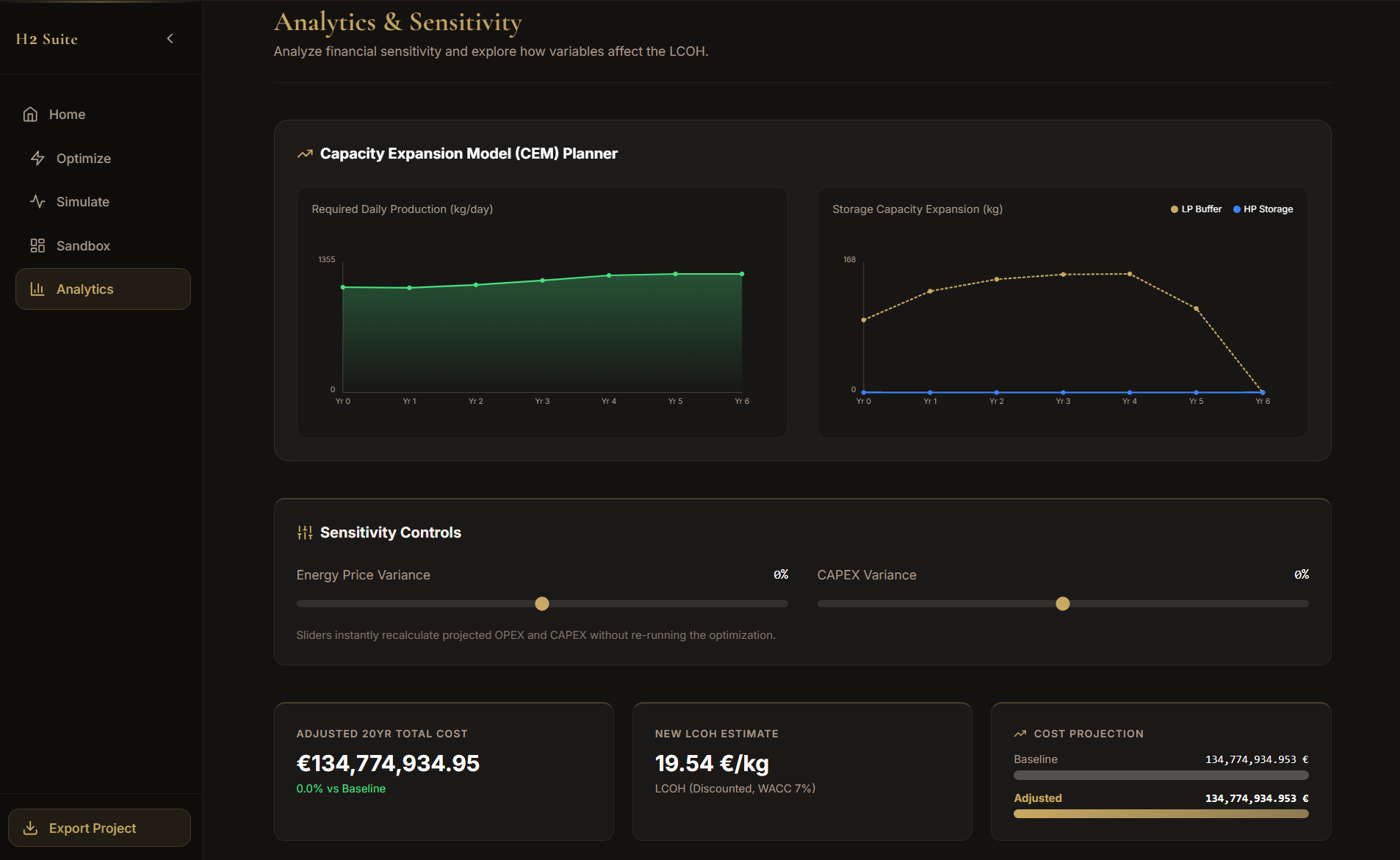
The Problem We Solve
Green hydrogen projects fail before they are born.
Designing a green hydrogen facility today means months of engagement with consultants, imprecise calculations that shift with every assumption, and a final model you cannot interrogate — costing hundreds of thousands of euros before a single brick is laid.
The consequence? 18+ months of delay. 30% hidden CAPEX overruns. And investment decisions made on spreadsheets that were already outdated when they were delivered.
Our Solution
How Septimus Cultura Works
An autonomous engine that designs hydrogen plants the way engineers wish they could.
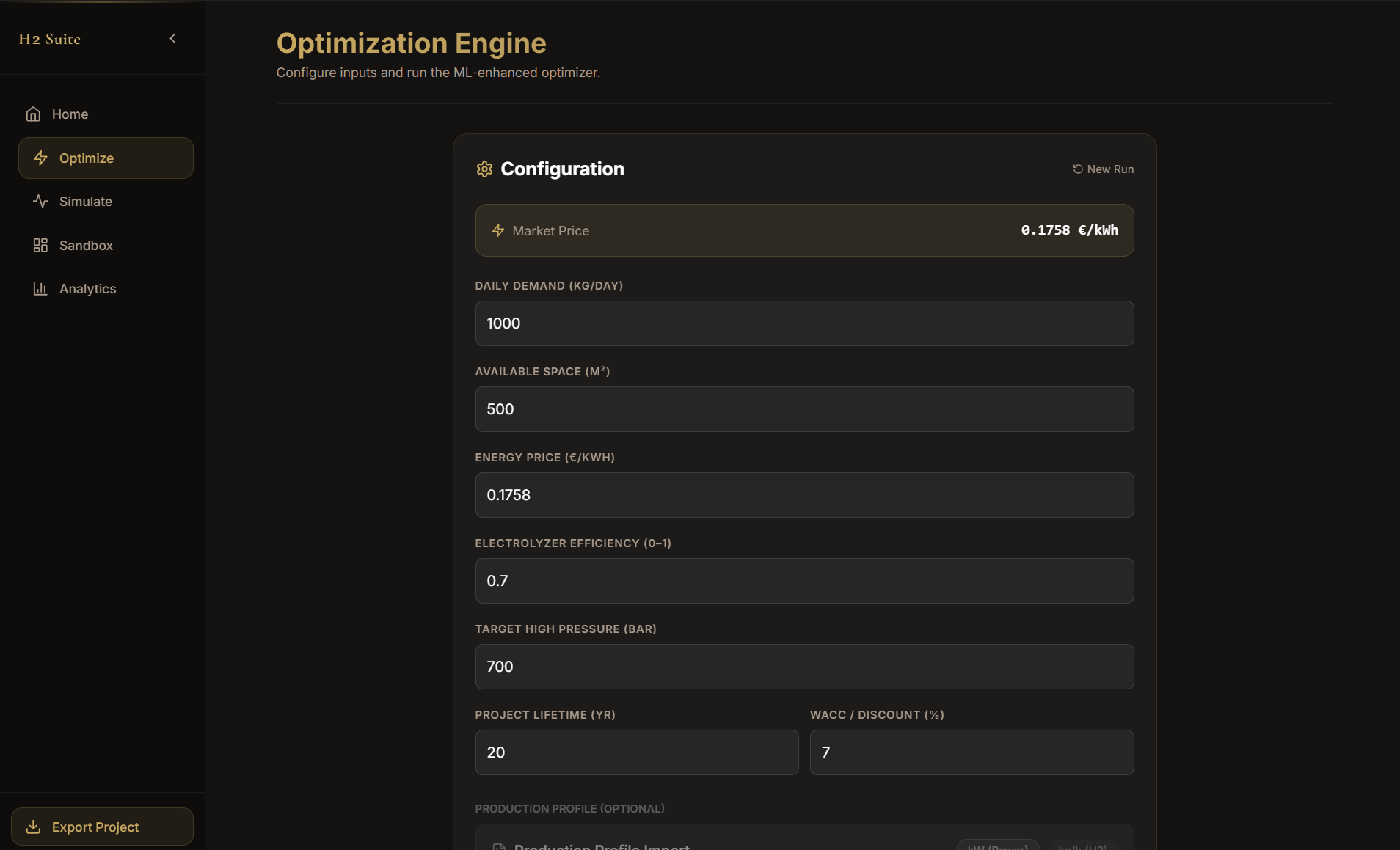
Input Your Parameters
Share your demand, energy price, available space, and target pressure. That's all we need to get started.
Our intake form is designed for engineers — precise, structured, and fast. No unnecessary data, no gatekeeping meetings.
The Engine Optimizes
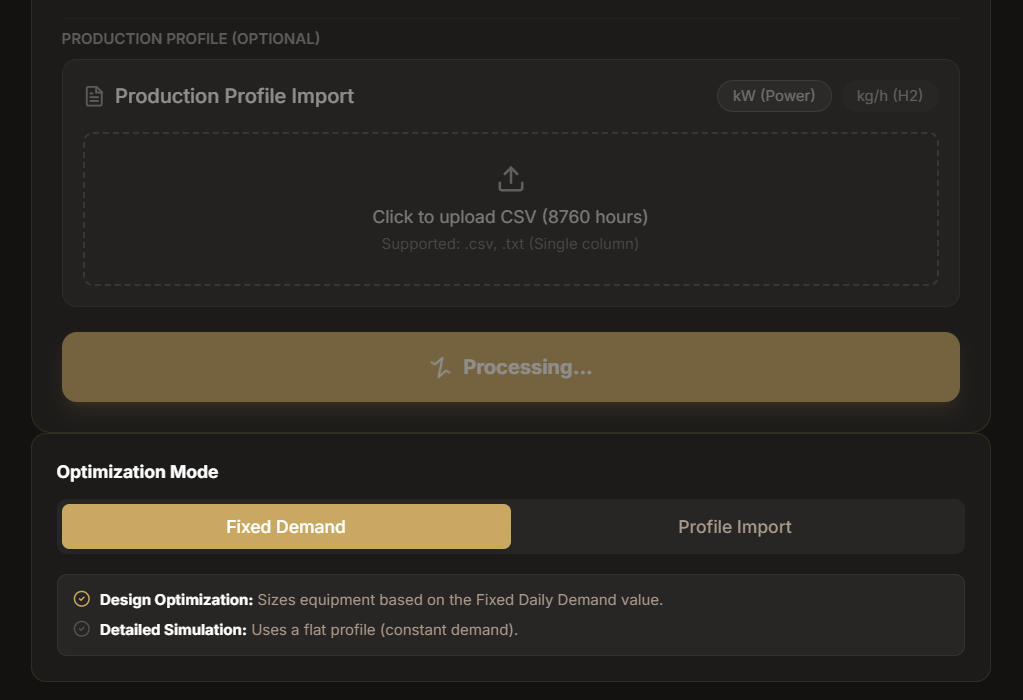
Our proprietary optimization engine evaluates thousands of configurations to find the design that minimizes your LCOH and maximizes plant availability.
Using physics-first electrochemistry and thermodynamic models, we iterate across module sizes, OEM specs, compression stages, and energy mixes — in under 10 minutes.
You Receive a Report
Full techno-economic breakdown: CAPEX, OPEX, LCOH, module distribution recommendation, and availability risk analysis.
This report is not a black box. Every cost driver is transparent, auditable, and defensible. Use it for internal decision-making, investor presentations, or regulatory filings.